Why Devon? Holiday, Buy a Property, Move and Work in Devon
Discover why Devon is a wonderful place to holiday, buy property, live and work. Explore beaches, Dartmoor, towns, villages, property, jobs and the Devon lifestyle.
By West Country Escapes
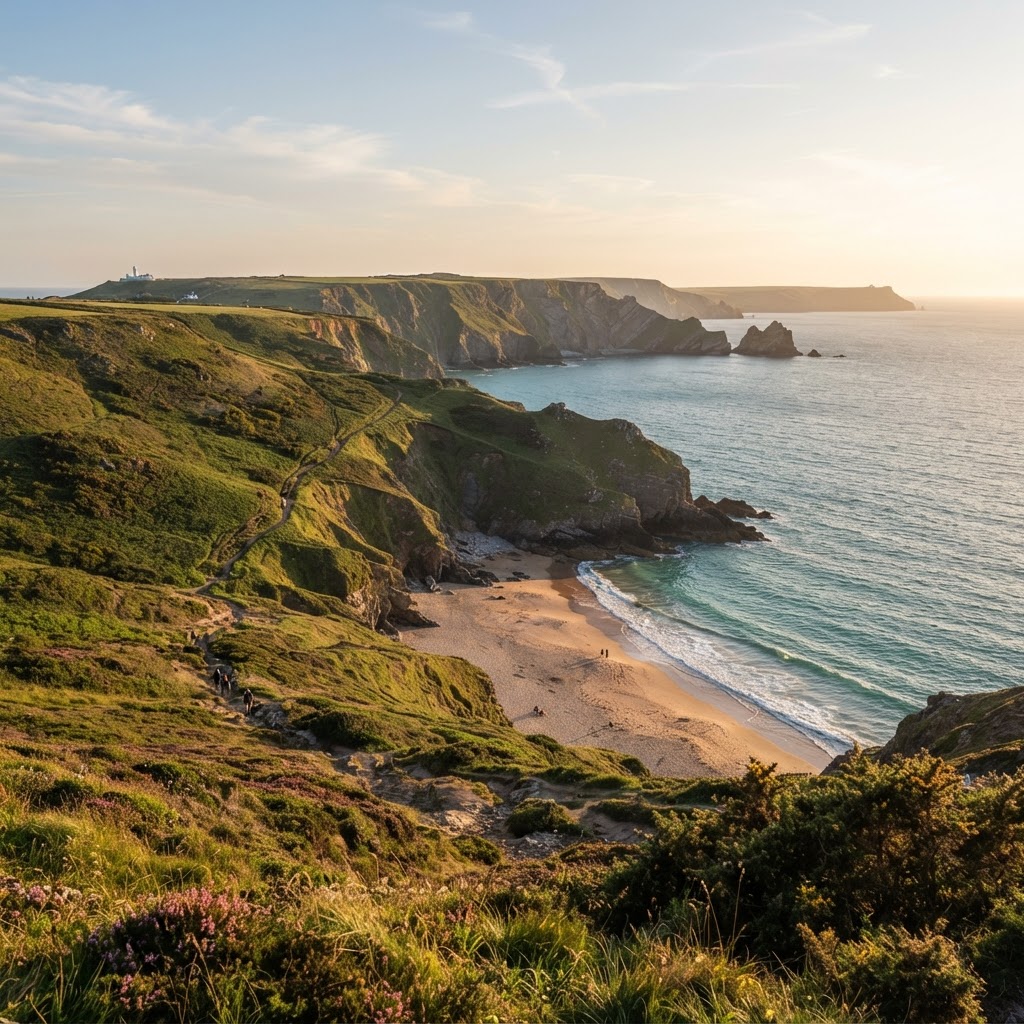
There aren't many places where you can wake up surrounded by countryside, spend the afternoon beside the sea and finish the day watching the sun disappear from a beach.
Devon is one of them.
With two contrasting coastlines, beautiful beaches, historic towns, fishing villages, rolling countryside and the wild landscapes of Dartmoor and Exmoor, Devon offers an extraordinary variety of places to visit — and places to live.
It's somewhere families return to year after year. Some come for surfing. Others for walking, sailing, food, countryside or simply a cottage somewhere peaceful.
And, as happens with so many favourite holiday destinations, eventually a different thought can creep in:
What if we bought a property here?
Followed perhaps by:
Could we move to Devon? Could we find work here? And what would everyday life actually be like?
Let's find out.
Why Holiday in Devon?
One of the biggest advantages of a holiday in Devon is choice.
Devon's official tourism guide highlights its beaches, surfing, watersports, countryside and two national parks, while North and South Devon offer markedly different coastal experiences.
Want an energetic family surfing holiday? Head north. Dreaming of sheltered coves, harbours and sailing? Explore South Devon. Want wild countryside and walking? Make for Dartmoor or Exmoor. Prefer a city break mixed with beaches and countryside? Exeter and Plymouth give you another option entirely.
You could holiday in Devon several times and have a completely different experience on every visit.
North Devon: Beaches, Surfing and Wild Coast
North Devon is the Devon of huge sandy beaches, dramatic coastline and Atlantic waves.
Woolacombe, Croyde and Saunton Sands are among its best-known beaches, and North Devon is particularly associated with surfing. The area is home to a UNESCO World Surfing Reserve, with Croyde, Woolacombe and Saunton among the beaches highlighted by Visit Devon for their year-round waves.
But you certainly don't have to surf. You can walk, swim, explore rock pools, cycle, have lunch overlooking the sea, or simply find a patch of sand and stay there.
Nearby destinations including Ilfracombe, Lynton and Lynmouth, Barnstaple and Appledore offer very different bases from which to explore North Devon. And head towards Exmoor and the landscape becomes wilder still.
South Devon: Beaches, Harbours and Coastal Towns
South Devon has a softer feel in places. Rolling countryside meets beaches, estuaries, harbours and seaside towns.
Visit Devon highlights beaches including Bigbury-on-Sea and Blackpool Sands, alongside the coves around Salcombe, with opportunities for swimming, kayaking and paddleboarding.
Then there are destinations such as Salcombe, Dartmouth, Totnes, Kingsbridge, Torquay, Brixham, Dawlish and numerous smaller coastal villages.
The South West Coast Path runs alongside much of this coastline, so it's easy to combine a beach holiday with walking. And sometimes the perfect day is very simple: coastal walk, lunch, beach, dinner overlooking the water. Repeat tomorrow.
East Devon and the Jurassic Coast
Devon's eastern edge provides yet another version of the county.
Exmouth, Sidmouth, Budleigh Salterton and surrounding East Devon combine coastline with attractive towns and countryside. East Devon also forms the western end of the Jurassic Coast, which continues into neighbouring Dorset.
Visit Devon describes East Devon as a place where Jurassic Coast scenery meets countryside, with fossil beaches, coastal walks, villages, food and local produce. For holidaymakers wanting to explore both Devon and Dorset, this part of the county can make an excellent base.
Discover Dartmoor
Then there's Dartmoor. And suddenly Devon becomes something entirely different.
Granite tors rise above open moorland. Ponies graze beside roads. Rivers cut through wooded valleys. Walking paths disappear into landscapes that can feel wonderfully removed from everyday life.
Visit Devon highlights Dartmoor for walking, cycling, wildlife, history, stargazing and family adventures. It's one of those places where the journey can matter as much as the destination. Pull on walking boots, take a map and explore. Then find a village pub afterwards. That's not a bad Devon day.
Discover Exmoor and North Devon
Exmoor straddles Devon and Somerset and gives North Devon another spectacular landscape. Here you'll find open moorland, woodland, rivers, valleys and walking routes.
North Devon's official tourism information highlights walks including the Valley of Rocks, Baggy Point, Hartland Quay, Tarr Steps and the Tarka Trail. That means a North Devon holiday doesn't have to revolve entirely around the beach. You can surf one day and head onto Exmoor the next.
Devon Is Made for Walking
If your idea of escaping involves walking boots, Devon is difficult to beat. There are sections of the South West Coast Path, Dartmoor and Exmoor routes, countryside trails and shorter circular walks around towns and villages.
South Devon even gained a new 101-mile South Hams Way in September 2025, beginning and ending in Totnes and linking coast, countryside and moorland landscapes.
You don't need to tackle 101 miles, of course. Pick a section. Walk for a couple of hours. Find somewhere good for lunch. Devon encourages that sort of holiday.
Is Devon Good for Family Holidays?
Very. Devon's variety makes it particularly easy to build a family holiday around different interests.
One day could be spent on the beach. Another surfing. Another cycling. Then Dartmoor. An attraction. A boat trip. Rock pooling. Paddleboarding. Or perhaps doing absolutely nothing beyond finding ice cream and somewhere to swim.
Visit Devon specifically promotes the county for families, couples, outdoor adventures, beaches and countryside escapes throughout the year. Self-catering accommodation can work especially well for families because you're not tied to a rigid schedule. And if everyone decides they want to go back to yesterday's beach? You can.
Devon Food and Drink
There is another important reason to visit Devon. Food.
The county's farming and fishing heritage feeds directly into its pubs, restaurants, markets and farm shops. Think fresh seafood, local meat and vegetables, cheeses, cider, independent bakeries, restaurants overlooking the coast, country pubs hidden down lanes.
And naturally: The Devon cream tea. Cream first. Then jam. At least if you'd rather not start an argument with Devon.
Food doesn't have to be an attraction you specifically visit. It can simply become part of the holiday.
Is Devon Worth Visiting Outside Summer?
Absolutely. Devon changes with the seasons.
Spring can be wonderful for countryside walks and gardens. Summer brings beaches, swimming, surfing and long evenings. Autumn can offer quieter coastlines, walking and food. Winter means moorland, dramatic seas, cosy pubs and rural escapes.
Visit Devon actively promotes the county as a destination throughout the year, rather than somewhere solely for summer holidays. For anyone considering eventually moving to Devon, visiting outside summer is particularly important. Holiday Devon and everyday Devon aren't always the same thing.
Why Buy a Property in Devon?
It's not difficult to understand why repeat holidays lead some visitors to start looking at property. But buying property in Devon can mean many different things: a permanent home, a retirement property, a second home, a rural escape, somewhere near the coast, or potentially a property intended for holiday accommodation, subject to all relevant regulations and professional advice.
And Devon's size gives buyers an extraordinary number of choices.
Where Should You Buy Property in Devon?
The first question may be: North, South, East or inland?
Exeter
For buyers who want employment, transport, shopping, schools, restaurants and city life without giving up easy access to Devon's countryside and coast, Exeter is an obvious place to investigate. It's a very different proposition from a tiny coastal village — and that's exactly why Devon has such broad appeal.
Plymouth
Plymouth combines a sizeable city with a strong maritime identity. For people working in marine, defence, healthcare, education and associated industries, Plymouth and the surrounding area can be particularly relevant.
South Hams
For coast, countryside and sought-after towns, buyers often look towards the South Hams. Salcombe and Dartmouth are two famous names, while Totnes, Kingsbridge and numerous villages provide alternatives. It's an area where buyers need to look carefully at local property values and availability because some coastal locations can command substantial premiums.
North Devon
For Atlantic beaches, surfing and open countryside, North Devon offers a very different proposition. Barnstaple provides the largest local centre, while places such as Ilfracombe, Braunton, Croyde, Appledore and villages throughout the area offer different combinations of coast and countryside.
East Devon
East Devon can appeal to buyers wanting attractive towns, beaches, countryside and access towards Exeter. Exmouth and Sidmouth are particularly well known, while numerous villages provide quieter alternatives.
Dartmoor
Perhaps your idea of Devon involves granite walls, open countryside and moorland rather than beaches. Towns and villages around Dartmoor can provide a completely different lifestyle — but rural accessibility, local facilities and connectivity require careful consideration.
Rural Devon
And then there is the Devon many people dream about. A cottage. An old farmhouse. A garden. A village pub. Fields. Maybe a view across rolling countryside.
The sea doesn't have to be directly outside your front door for Devon's coast to remain within reach. For some people, living slightly inland provides exactly the balance they're looking for.
Could You Buy a Holiday Home in Devon?
Devon's strength as a holiday destination naturally creates interest in second homes and holiday lets. But buyers need to understand the practical and financial realities rather than assuming any attractive cottage will automatically produce a successful holiday business.
Second-home Council Tax rules are also important. From 1 April 2025, local councils in England gained powers to charge a premium of up to 100% on qualifying second homes. Several Devon districts, including North Devon and Mid Devon, currently apply a 100% premium to qualifying second homes, subject to statutory exceptions.
Because Devon contains several different district and unitary council areas, buyers should check the rules applying to the specific property and local authority before purchasing.
You should also investigate planning requirements, mortgage restrictions, Council Tax or Business Rates, tax treatment, insurance, property-specific covenants, parking, seasonal demand, competition, maintenance costs, local amenities, and whether the area attracts visitors outside summer. And obtain appropriate legal, tax and financial advice.
Why Move to Devon?
For some people, the desire to move to Devon starts with one simple thought:
I'd like more of this in my everyday life.
More coast. More countryside. More outdoor space. Perhaps a different pace.
Living here means the beach doesn't have to be something you visit on holiday. Dartmoor doesn't require a weekend away. Walking, surfing, sailing and cycling can become part of everyday life rather than occasional treats.
But Devon isn't one lifestyle. That's one of its biggest strengths.
North Devon or South Devon: Which Is Better to Live In?
There's no correct answer. It depends entirely on what you want.
North Devon can appeal to people prioritising surfing, beaches, wild coastline and a more rural feeling. Barnstaple provides a major local centre while the surrounding towns and communities offer smaller-scale living.
South Devon may suit those who love estuaries, sailing, beaches, attractive market towns and easy access towards Exeter or Plymouth, depending on location.
East Devon can offer a balance between coastline, countryside and access to Exeter.
Dartmoor and the surrounding towns can appeal to people whose priority is countryside, walking and rural living rather than having the beach immediately nearby.
The better question isn't: “Which part of Devon is best?” It's: “Which part of Devon fits the life I want?”
Is Devon Good for Families?
For many families, the outdoor lifestyle is a significant attraction. Beaches, countryside, surfing, walking, cycling and watersports provide plenty to do at weekends and during school holidays.
But practicalities matter enormously. Research schools, admissions and catchment areas, childcare, healthcare, transport, commute times, activities, shopping, broadband, and distance from family.
A rural cottage might look perfect online. But if school, work and every extracurricular activity require long journeys, everyday reality may look different.
Things to Consider Before Moving to Devon
Before relocating, investigate employment opportunities, local salaries, property prices, schools and childcare, healthcare, broadband and mobile coverage, public transport, rail connections, road journeys, distance from friends and family, everyday shops and services, seasonal tourism, flood or coastal risks where relevant, and rural driving distances.
Devon is a large county. Two properties that both appear to be “in Devon” can offer completely different access to transport, employment and services. Location really matters.
Can You Find Work in Devon?
Yes. And Devon's employment landscape extends far beyond tourism.
Tourism and hospitality are naturally important, but current regional planning identifies opportunities in areas including defence, marine technology, digital industries and green growth. Recent Devon and Torbay growth planning has also highlighted AI, digital and clean technology among strategic growth areas.
Devon is a major visitor destination — hotels, pubs, restaurants, holiday accommodation, attractions, watersports businesses, events and tourism services support employment throughout the county, from seasonal roles to hospitality management and entrepreneurship.
Devon's relationship with the sea isn't simply recreational. Marine technology and related industries are specifically identified among the region's assets for creating higher-value employment. Plymouth in particular has a strong maritime identity and an ecosystem of marine and associated businesses.
Defence is another significant regional strength, with economic planning for Devon, Plymouth and Torbay identifying defence alongside marine technology, digital and green growth as an asset that can support high-value employment.
Digital development is also part of Devon's economic growth strategy — the region's planning has identified digital, AI and clean technology among strategic areas for future growth. Combine that with remote working and the employment possibilities become considerably wider.
Green growth and clean technology are among the sectors identified in current regional plans, creating potential opportunities in sustainability, energy, engineering, environmental services and technology.
Healthcare, education and public services also provide employment throughout Devon. Exeter and Plymouth in particular support universities, hospitals and large organisations, while schools, care providers and public-sector employers operate across the county.
Agriculture and food remain fundamental parts of rural life. Farms, food producers, manufacturers, hospitality businesses, farm shops and independent retailers form an interconnected local economy. Devon's reputation for food also creates opportunities for entrepreneurial businesses built around local products and visitor experiences.
Can You Work Remotely from Devon?
For many prospective residents, this is the question that changes everything.
If you can work from home full-time — or only need to travel into an office periodically — you may be able to keep an existing job while moving to Devon. That can make towns and rural communities realistic for careers that previously required living close to London, Bristol or another major employment centre.
However: Always check broadband and mobile coverage at the actual property. Connectivity can vary significantly, particularly in rural areas. An idyllic cottage is slightly less idyllic if your video meeting freezes every thirty seconds.
Where Are the Best Places to Live and Work in Devon?
The answer depends on your career and lifestyle.
Exeter may suit people prioritising professional employment, education, transport and city facilities. Plymouth can appeal particularly to people working in marine, defence, healthcare, education and associated sectors. Barnstaple is an important centre for North Devon. Newton Abbot provides useful access towards Exeter, Torbay and South Devon. Totnes combines a distinctive independent identity with access to South Devon. Tiverton can appeal to people wanting a smaller town with useful connections. Exmouth offers coastal living within reach of Exeter.
And Devon's countless villages and rural communities can become realistic options for remote workers or people whose careers aren't tied to a particular centre.
Try Living in Devon Before You Move
Before selling up and relocating, do some of the most enjoyable research imaginable: Go and live in Devon for a little while. Not permanently. Not yet.
Book somewhere for a week or two in the location you're considering. And try not to behave entirely like a tourist.
If possible, work from there. Do the food shop. Drive the potential commute. Visit schools. Go to the nearest town. Check how long it takes to reach the railway station. Try the local pub midweek. Drive the roads after dark. See what the area feels like in bad weather. And ideally return during another season.
You might discover North Devon is where your heart is. Perhaps South Devon feels more practical. Maybe Exeter gives you the balance of city and countryside you want. Or perhaps a Dartmoor town you've never previously considered suddenly feels right.
Holiday in Devon or Live in Devon?
You don't have to decide. Come for the holiday first.
Surf at Croyde. Walk Dartmoor. Explore Dartmouth. Spend a day in Exeter. Discover North Devon. Visit Salcombe. Walk a section of coast path. Find a country pub. Come back in autumn. Try East Devon next time. And see what happens.
Because Devon can be somewhere you holiday. Somewhere you buy property. Somewhere you invest in a holiday home. Somewhere you find work or start a business. Or somewhere you eventually decide to call home.
Discover Devon with West Country Escapes
Maybe you're looking for your next holiday in Devon. Perhaps you're considering buying a property in Devon. You might be thinking seriously about moving to Devon, exploring jobs in Devon, or wondering whether you could work remotely and exchange city life for the coast or countryside.
Start by getting to know the county. Explore North Devon and South Devon. Head onto Dartmoor. Discover East Devon. Stay in a town one time and a village the next. Walk the coast. Eat locally. See what's on. Explore beyond the most famous destinations. And experience Devon at different times of year.
Explore where to stay, what to do, what's on and places to discover throughout Devon with West Country Escapes — and find the part of Devon that feels right for you.